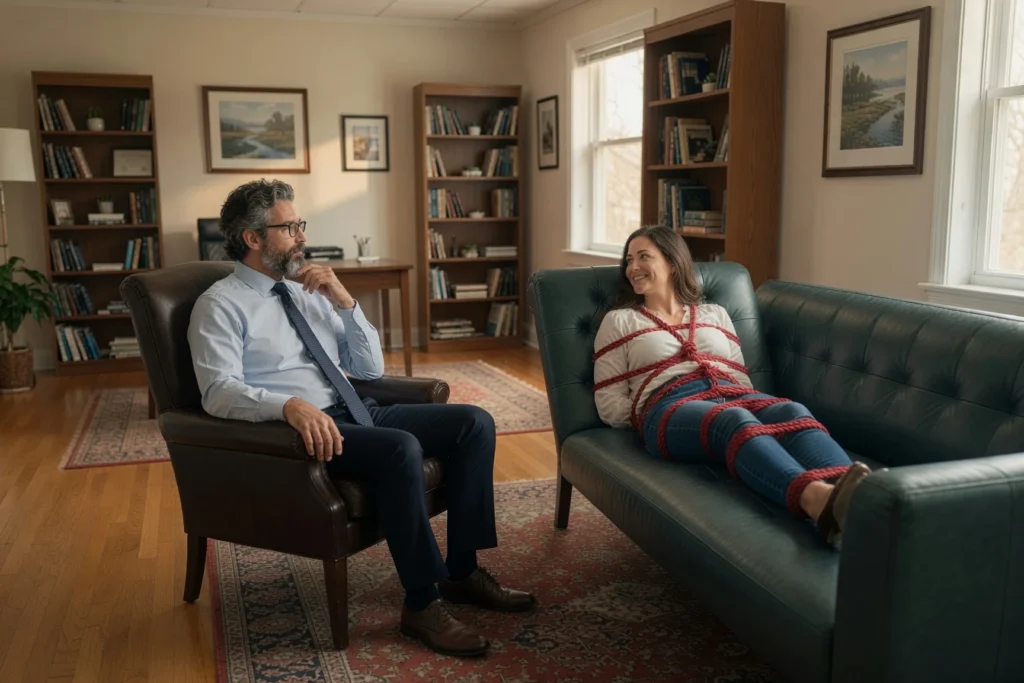
If you’ve ever been spanked, flogged, or tied up, you’ve likely felt your worries and responsibilities slip away, even if only for a brief time. Or perhaps you’ve experienced a deeper sense of catharsis that stays with you long after the scene ends. There’s no question that BDSM can be healing and therapeutic for many, but it’s not therapy.
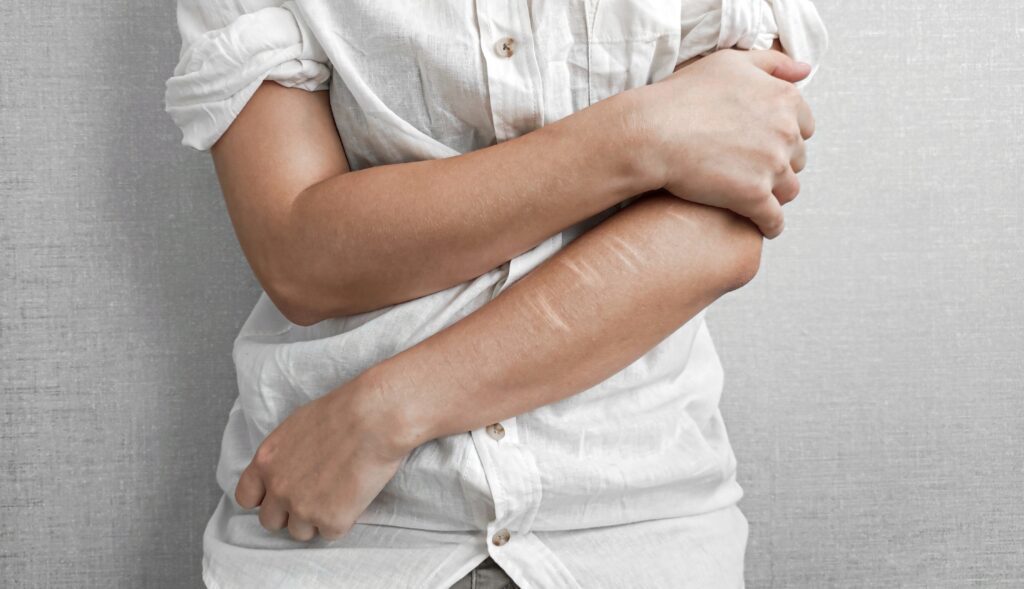
As a teenager, Vagabond sought out creative ways to shock himself—with low-voltage electronics, exposed wires, computer parts, you name it. As an adult, Mimsy was in a long-term relationship with a man who used to punch himself until he bruised. To an outside observer, these two behaviors might look very similar. After all, they both involve self-inflicted injury. But for Vagabond, shocking himself to feel sharp, sustained pain was a way to satisfy his masochistic desires, whereas Mimsy’s partner punched himself out of self-loathing and rage. In this post, we’ll explore the distinction between BDSM and self-harm—or, as the kink community might frame it, the distinction between hurt and harm.
As the coronavirus (COVID-19) continues to wreak havoc across the globe, many of us are living under restricted and isolated circumstances that are challenging, to say the least. Suddenly, all the activities we took for granted in our “old” lives—hanging out with friends, going out to eat, stress-free sex—seem like ancient history as we struggle to find a new sense of equilibrium. But in the midst of all this chaos and uncertainty due to the coronavirus, kink and BDSM can provide a crucial way to regain a sense of control.
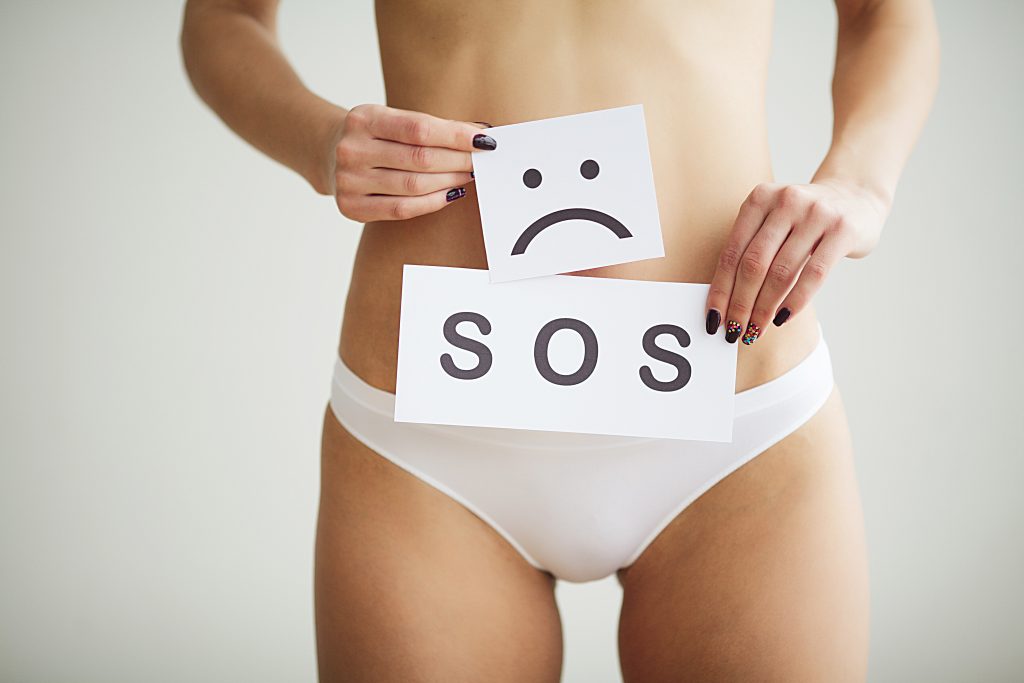
One day in the summer of 2004, I woke up with what I thought was a UTI. I’d had them before and detected the tell-tale burning sensation. I made an appointment with my gynecologist. Little did I know that this would be the beginning of a condition I’d never even heard of but that would leave me in chronic pain for years to come: vulvodynia.